A changing poncho has two jobs at the water’s edge: dry you off and screen you while you get out of a wet wetsuit or swimsuit. How well it does both comes down almost entirely to one decision made before any logo goes on it, which is the towelling fabric. Surfers, open-water swimmers, triathletes, poolside parents, and cold-water dippers all reach for the same garment, but they do not all want the same cloth. This is a look at what the fabric choice actually changes, and how to read the one spec that tells you most about a poncho before you buy.
The fabric decision comes first
Almost every changing poncho is made from one of two families of towelling: microfibre, a synthetic blend engineered to move water fast, or cotton terry, the classic looped towel cloth. They feel different, weigh different, and behave differently the moment they get wet. Microfibre is lightweight, packs down small, shrugs off sand, and dries quickly, which is why it dominates travel and repeat-use situations where the poncho has to go back in a bag still slightly damp. Cotton is softer against the skin and feels warmer wrapped around you after a cold swim, holds more water for its size, but is heavier, bulkier, and slower to dry. Neither is simply better. They are tuned for different priorities.
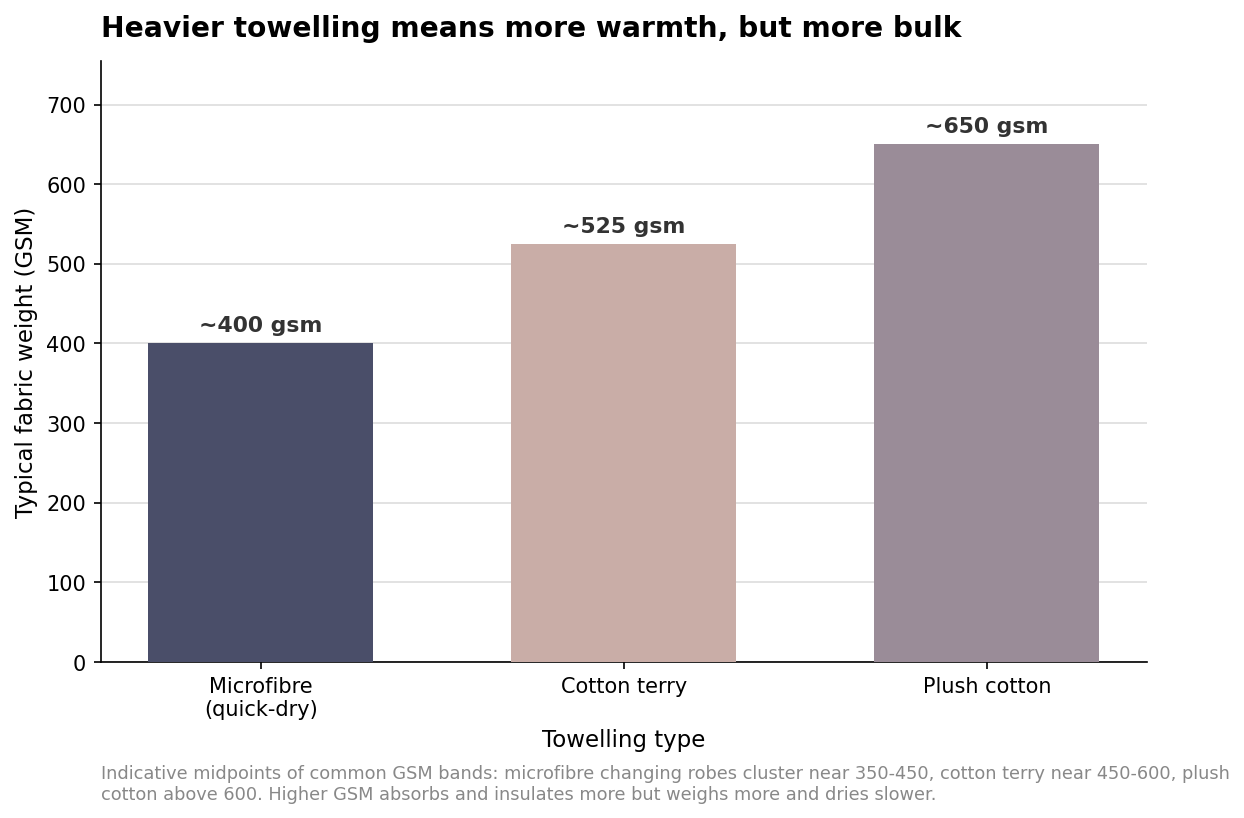
The weight of the cloth is where those priorities show up first. A lighter microfibre poncho trades some plushness for packability and speed; a heavier cotton one trades bulk for warmth and a more luxurious feel. If your buyer is carrying the poncho to and from the beach every day, weight matters more than it looks. If they are standing on a cold shoreline in October, the warmth of a heavier cotton cloth earns its extra grams.
Drying speed is the everyday difference
The single most noticeable gap in daily use is how fast each fabric dries. Microfibre dries roughly three times faster than cotton, and a quality microfibre poncho can be touch-dry in around fifteen minutes in reasonable air. Cotton, by contrast, stays damp far longer, which is fine at home on a rail but a real drawback for someone using the poncho twice in a day or living out of a kit bag.
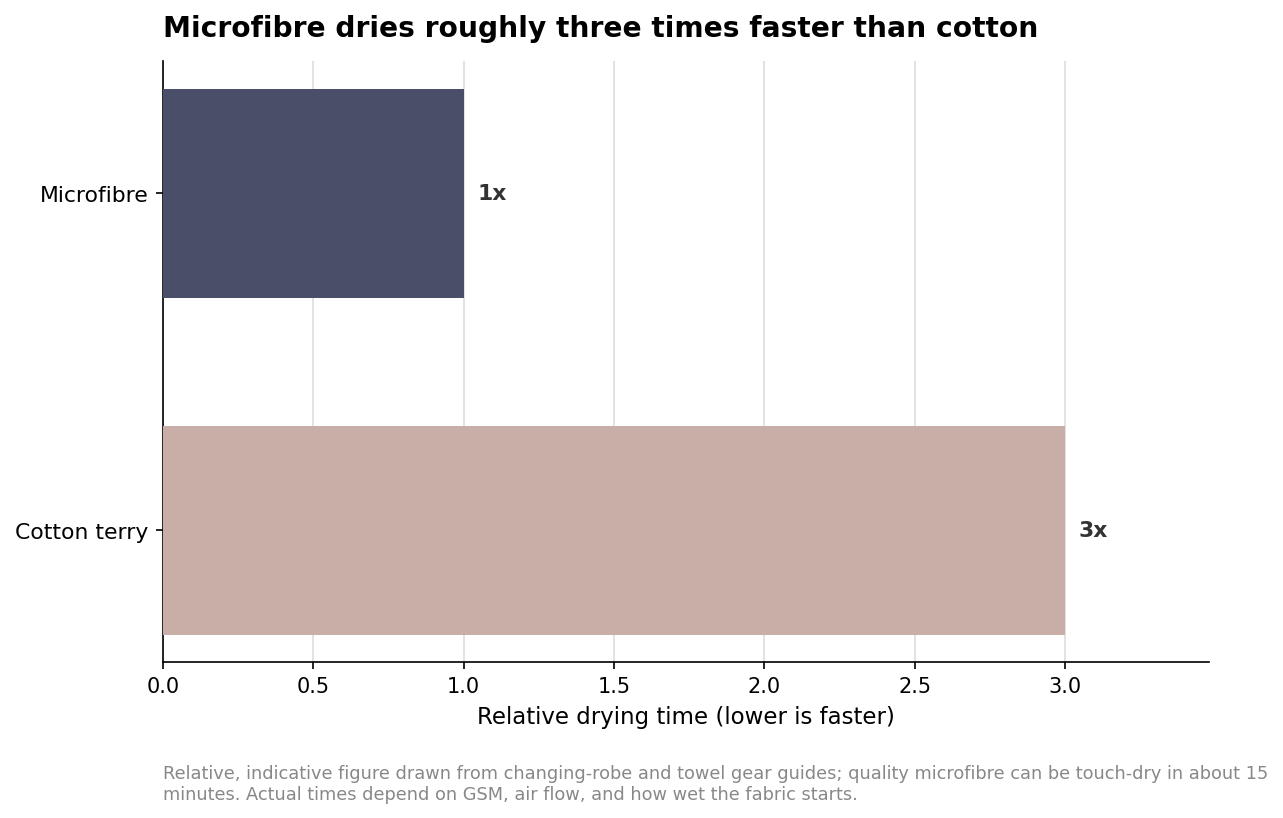
Fast drying is not only about convenience. A poncho that dries quickly resists the musty smell and mildew that damp cotton develops when it is rolled up wet and forgotten, which is the most common reason a towelling garment gets thrown out early. For clubs and squads issuing ponchos that will be used hard and stored carelessly, that difference in longevity is worth weighing.
How to read GSM, the number that matters
GSM, or grams per square metre, is the density of the towelling and the most useful single spec on the label. As a rough guide, cloth in the 300 to 400 GSM range is lightweight and quick-drying, 400 to 600 GSM is a medium, everyday weight with a good balance of absorbency and drying, and anything above 600 GSM is plush and warm but heavy and slow to dry. Microfibre changing robes commonly sit toward the lower end of that scale because the fibre structure lets them absorb well without much mass, while cotton versions climb higher to deliver warmth. When you are comparing two ponchos, GSM tells you more about how each will actually behave than marketing words like “premium” or “ultra-absorbent” ever will. Match it to the climate and use: lower GSM for warm-weather, high-frequency, travel-heavy use, and higher GSM where post-swim warmth is the point.
Fit, hood, and pockets
Fabric decided, the build details are what make a poncho pleasant to actually use. A hood adds meaningful warmth and is close to essential for cold-water swimmers. A front pocket gives somewhere for cold hands, keys, or a phone while changing. Length matters for the privacy job: a poncho that falls to at least mid-thigh gives enough coverage to change under without a balancing act, and taller users need a longer cut to get the same coverage. Most ranges settle on a small number of sizes, typically a standard adult fit, a longer or roomier cut for taller adults and cold-water use, and a smaller proportioned version for children, often banded by age. For a group order, keeping to a tight set of sizes that genuinely fit the squad is easier to manage than trying to match every individual.
Specifying a custom run for a club or event
If you are ordering branded ponchos for a surf club, swim squad, school, or event, work the decisions in order. Start with the fabric and GSM that suit your climate and how the ponchos will be used, since that governs comfort and lifespan more than anything else. Standardise on a short size run that covers your members rather than a size for every body. Then decide how the branding is applied: embroidery sits well on cotton terry and reads as premium, while print reproduces logos and full-colour artwork cleanly on smooth microfibre, so let the fabric guide the method rather than forcing one onto the wrong cloth. Ask for colourfast dyeing if the ponchos will see chlorine or salt water regularly, and confirm the proof shows your logo at the size and placement you want, usually on the chest or the back panel. Minimum order quantities and lead times vary by supplier and decoration method, so build those into your timeline early, especially if the ponchos are tied to a specific event date. Get the fabric right first, and the rest of the specification falls into place around it.